
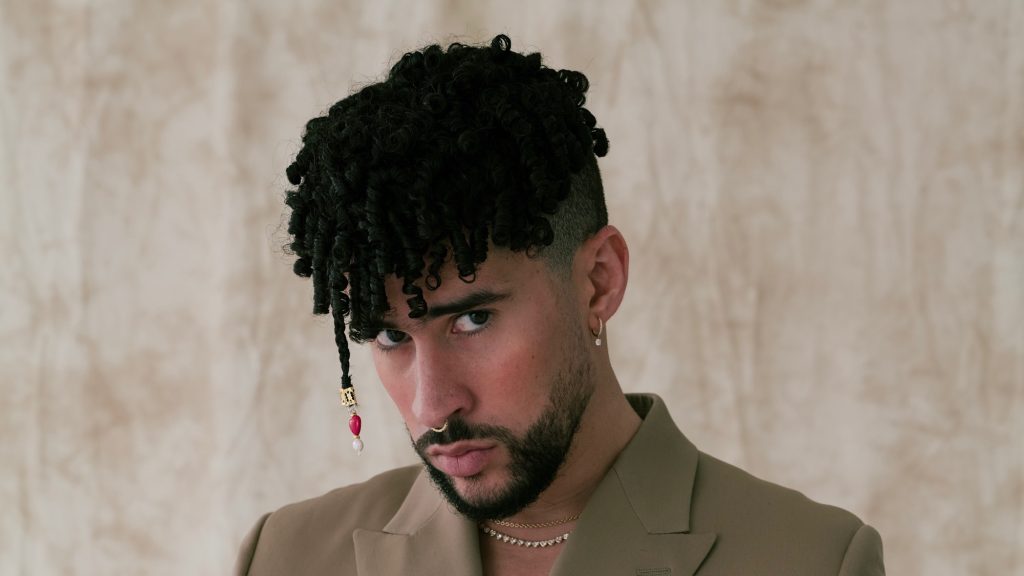
Bad Bunny shows how Latinos shape America
-
 Carlos Leon-Trejo, Contributor
- February 7, 2026
Bad Bunny reminds us of Latinos who paved way in U.S.
At a time when United States immigration policies and enforcement have created fear and uncertainty in many Latino communities, seeing Puerto Rican artist Bad Bunny headline the Super Bowl LX halftime show is more than just entertainment. It’s representation for a community going through immense political pressure.
It’s a reminder that Latinos don’t just contribute to this country’s culture. We help shape it.
“I am excited about this performance,” Bad Bunny said at the Super Bowl LX half time press conference. “I’m excited. But at the same time, I feel more excited about the people than even me, my family, my friends, and the people who have always believed in me.
“This moment, the culture, that’s what makes these shows special.”
‘La Mudanza’ resonates
When I think about the three-time Grammy winner performing on one of the world’s biggest stages, I am reminded of the generations of Latinos who paved the way for moments like this. His song “La Mudanza” captures a sense of lineage and sacrifice.
The song opens with a spoken-word reflection in which Bad Bunny traces his family’s beginnings. It starts with his father, Benito “Tito.” The patriarch was the eldest of six followed his father and grandfather into truck driving despite wanting to become an engineer. Bad Bunny’s mother, Lysaurie “Lisy,” met Tito while helping a friend move, shaping the family that they would build.
More from Our Esquina
Bad Bunny declares ‘ICE out’ at Grammys
Inspired by Zach Calzada, Fernando Mendoza passes torch
Texas A&M star KC Concepcion speaks with authority
Bad Bunny says he learned a lot from that record. Moreover, he considers that project one of the most if not the most special of his career because it helped him land the Super Bowl halftime gig.
“I wasn’t looking for Album of the Year,” he said. “I wasn’t looking to perform at the Super Bowl halftime show.”
Instead, Bad Bunny insists that he was trying to connect with his Puerto Rican roots and his “people more than ever.”
“Connect with myself, with my history,” he says. “You always have to be proud of who you are and where you’re from. But don’t let that limit where you can go.”
Hearing the Album of the Year winner honor his roots reminded me of my own roots. As an immigrant from Guanajuato Mexico, I am reminded of the sacrifices my grandfather made for my family when he came to America through the Bracero program.
Humble roots
He endured heavy labor in the fields of Le Grand, Calif, in the San Joaquin Valley. My father joined him once he was old enough. They paved the way for generations that followed.
Latino representation won’t only shine at halftime. New England cornerback Christian Gonzalez is set to compete on football’s biggest stage. The Pro Bowl selection’s path was shaped by a family of athletes. His father came from Colombia to play college basketball. Gonzalez’s two sisters have represented Colombia in track and field.
Gonzalez is joined in the Patriots’ secondary by Jaylinn Hawkins, a Panamanian American safety who recorded four interceptions and 71 tackles this season. Rookie kicker Andy Borregales, who was born in Caracas, will make history as the first Venezuelan to appear in a Super Bowl.
Seattle safety Julian Love, who is of Mexican and Cuban heritage, will lead the league’s top-ranked defense. The Seahawks also feature rookie tight end Elijah Arroyo. The Seahawks also carry Puerto Rican center Federico Maranges on their practice squad.
Football helped me acclimate to American culture. Seeing someone like Bad Bunny celebrated on a big stage, alongside Latino athletes who redefine what representation looks like in the NFL, feels like a bridge between where I came from and where I am.

Carlos Leon-Trejo
Contributor
Carlos Leon-Trejo is a co-host on the Bring on the Blitz! podcast on the Our Esquina network. A graduate of the Texas A&M-Victoria, his reporting credits include major stages such as the CONCACAF Gold Cup and the Big 12 Championship.
Stay in the Loop
Get the Our Esquina Email Newsletter
By submitting your email, you are agreeing to receive additional communications and exclusive content from Our Esquina. You can unsubscribe at any time.